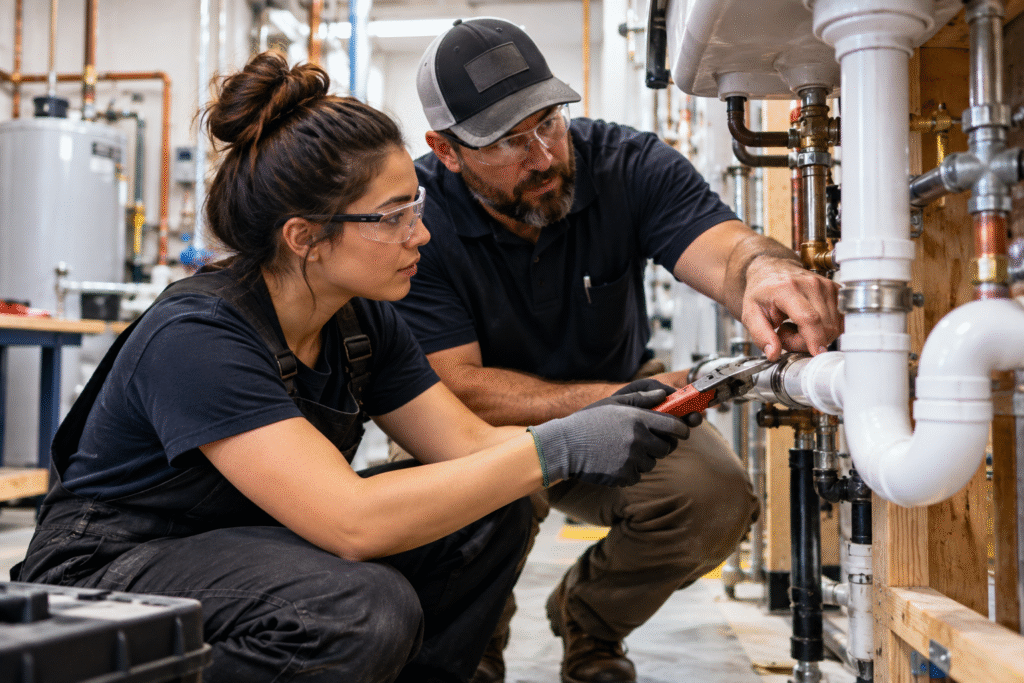
When a faucet starts leaking or a drain stops flowing, the solution can sometimes look simple from the outside. Find the problem, replace a part, and everything works again. In reality, professional plumbing can require considerably more investigation and problem-solving than many people realize.
A visible plumbing problem is not always the actual source of the issue. Water can travel, drainage problems can develop farther down a system, and changes in water pressure can have several possible causes. Plumbers need to understand how plumbing systems function so they can evaluate what is happening and determine an appropriate solution.
For students interested in a hands-on trade that combines technical knowledge with problem-solving, plumbing training can help build an important foundation.
Why Does Plumbing Training Teach You to Look Beyond the Obvious Problem?
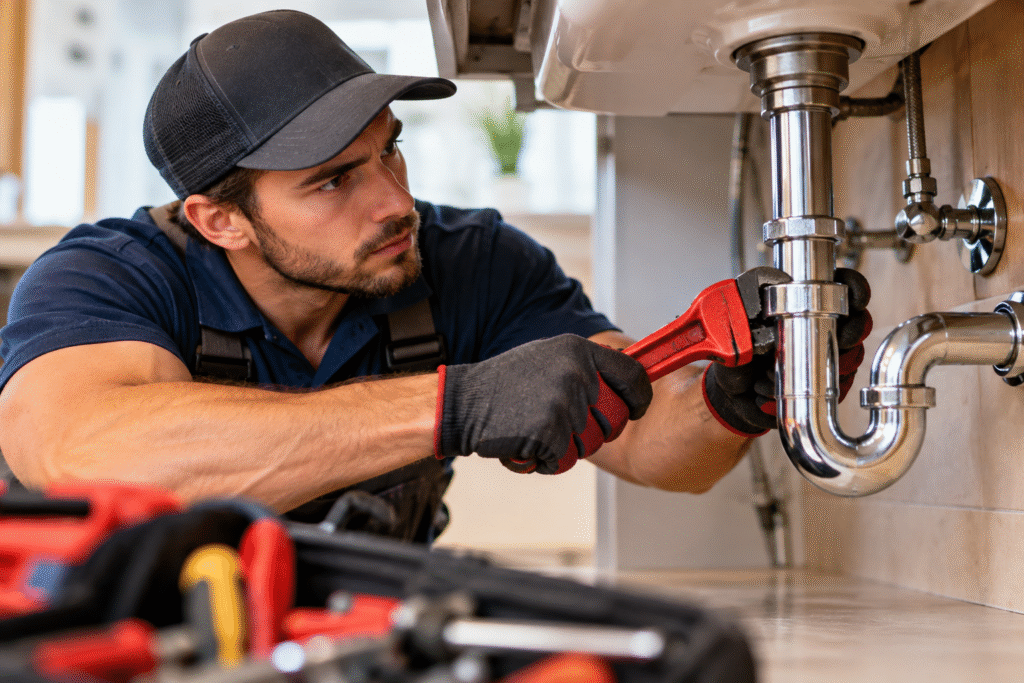
Imagine discovering water underneath a kitchen sink. The immediate assumption might be that a pipe is leaking, but several components could potentially be responsible. The problem could involve a connection, supply line, drain component, fixture, or another part of the system.
The same principle applies to many plumbing problems.
A slow drain, unusual noise, inconsistent water pressure, or recurring leak can require investigation before the cause becomes clear. Plumbers need to look beyond the obvious symptom and understand how different parts of the plumbing system interact.
Plumbing training helps students begin developing this type of thinking by teaching the fundamentals behind water supply, drainage, piping, fixtures, and other components.
How Do Plumbers Diagnose Problems?
- Troubleshooting usually begins by gathering information.
- Where is the problem occurring? When did it begin? Is it affecting one fixture or several? Has anything recently changed?
- Answers to questions like these can provide clues.
- From there, a plumbing professional may inspect components, evaluate the system, and determine which possible causes should be investigated further.
- Training can help students learn how to approach problems systematically instead of immediately making assumptions. This type of logical thinking can be useful whether the issue involves a dripping faucet or a more complicated plumbing system.
Why Do Plumbers Need to Understand Water Pressure?
Water pressure affects how plumbing systems operate.
If pressure is too low, fixtures may not perform as expected. If pressure is unusually high, it can place additional stress on certain plumbing components.
Understanding pressure gives plumbers another piece of information they can use when evaluating a system.
During plumbing training, students can begin learning the principles behind water movement and how different components influence system performance.
These fundamentals can help students understand why a symptom in one part of a property may be connected to conditions elsewhere in the plumbing system.
What Makes Drainage Problems Complicated?
A clogged sink seems straightforward until clearing the area directly beneath the drain does not solve the problem.
Drainage systems connect multiple fixtures and pipes, which means the location where a problem appears may not always be the location where the blockage or other issue originated.
Plumbing professionals need to understand how drainage systems are arranged and how wastewater moves away from fixtures.
Training can introduce students to drainage principles and help them understand how plumbing systems are designed to move both water and waste efficiently.
Why Does Pipe Material Matter?
Plumbers may encounter several different piping materials depending on the property, application, and age of the plumbing system.
Different materials can require different installation, connection, and repair techniques. A plumber needs to recognize what type of material is being used and determine which tools and procedures are appropriate.
Students in plumbing training can become familiar with common materials such as copper, PVC, CPVC, and PEX while developing an understanding of how they may be used within plumbing systems.
Learning about different materials can also prepare students for the reality that no two properties are necessarily identical.
How Important Is Precision in Plumbing?
- A small mistake can become a big plumbing problem.
- Incorrect measurements, poorly fitted connections, or improper installation can potentially result in leaks and additional repairs. Plumbing therefore requires patience and attention to detail.
- Students can practice measuring, cutting, fitting, and assembling plumbing components as they develop their skills.
- Hands-on practice is valuable because it allows students to experience how small adjustments can affect the final result.
- Over time, this can help build both technical ability and confidence.
Does Plumbing Require Customer Service Skills Too?
Plumbing may be a technical trade, but plumbers frequently work directly with people.
A homeowner dealing with a leak or backed-up drain may be frustrated or concerned about property damage. A plumbing professional may need to explain what was discovered, discuss the work that needs to be performed, and answer questions in a way the customer can understand.
Communication and professionalism can therefore be important alongside technical ability.
Students preparing for the plumbing field can benefit from understanding that the job involves more than tools and pipes. Being able to communicate clearly can be an important part of providing professional service.
Why Is Hands-On Training Important for Future Plumbers?
Plumbing involves skills that are difficult to develop through reading alone.
Students can benefit from opportunities to work with tools, materials, fittings, and plumbing components while applying concepts they have learned.
Hands-on training allows students to practice procedures and develop familiarity with equipment in an educational setting.
It can also help students learn from mistakes. Discovering why a fitting does not connect properly or why a measurement needs to be adjusted can reinforce lessons that may be difficult to understand from a textbook alone.
Build Your Plumbing Skills at American Vocational Academy
Plumbing is not simply about knowing how to replace a pipe or unclog a drain. It requires understanding how systems work, recognizing potential causes of problems, selecting appropriate tools and materials, and developing solutions based on what is happening in front of you.
For someone who enjoys working with their hands and solving practical problems, plumbing training can provide an opportunity to begin developing those abilities.
American Vocational Academy offers plumbing training designed to introduce students to important concepts and hands-on skills used throughout the trade.
If you are interested in plumbing training in Florida, contact American Vocational Academy to learn more about available programs, training opportunities, and enrollment.